What Is Enterprise Asset Management (EAM)?

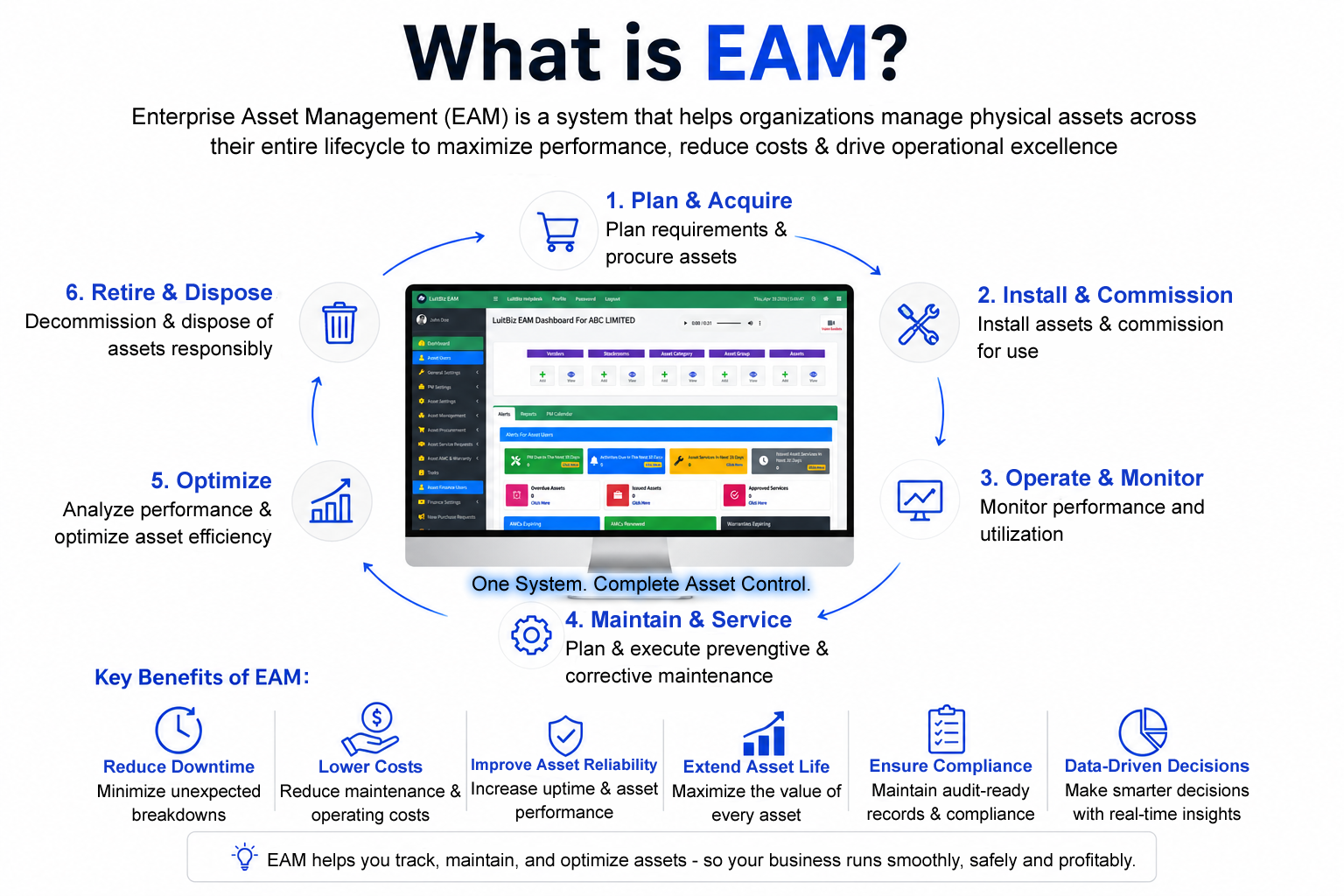
Enterprise Asset Management (EAM) is a system used by organizations to manage, monitor, and optimize physical assets throughout their entire lifecycle - from procurement and installation to maintenance, performance tracking, and eventual retirement.

In asset-intensive industries, unplanned downtime, poor maintenance planning, and lack of visibility can lead to significant operational losses. EAM systems solve this by providing a centralized platform to manage assets efficiently, reduce costs, and improve operational reliability.

In simple terms, an EAM system helps organizations:

  • Reduce downtime and avoid costly breakdowns
  • Control maintenance costs and extend asset life
  • Maximize the return on every asset investment

Modern platforms like LuitBiz EAM digitize and automate these processes - helping organizations improve asset performance, increase operational efficiency, and deliver measurable cost savings.


EAM Definition

Enterprise Asset Management (EAM) refers to the processes, software, and tools used to:

  • Track physical assets across their lifecycle
  • Plan and execute maintenance activities
  • Monitor asset performance and utilization
  • Ensure compliance with regulatory standards
  • Optimize asset lifespan and total cost of ownership

EAM systems are widely used in industries such as manufacturing, energy, pharmaceuticals, infrastructure, logistics, and facilities management.


How EAM Works

An EAM system works by centralizing all asset-related data into a single platform.

Key functions include:

  • Asset registration and classification
  • Preventive and predictive maintenance scheduling
  • Asset procurement, AMC, Warranty, and service management
  • Spare parts and inventory tracking
  • Real-time monitoring and reporting
  • Compliance and audit documentation

This allows organizations to move from reactive maintenance to proactive and predictive strategies.

Asset Lifecycle in EAM

EAM manages assets across all lifecycle stages starting from procurement, service, managing AMCs and Warranties to disposal.

The various stages of an asset's lifecycle that can be managed using EAM include:

  • 1. Planning & Procurement
  • 2. Installation & Commissioning
  • 3. Operation & Monitoring
  • 4. Maintenance & Repairs
  • 5. Optimization & Performance Tracking
  • 6. Decommissioning & Disposal

This lifecycle approach ensures maximum asset efficiency and longevity.


Why EAM is Important

Without a proper EAM system, organizations often face:

  • Frequent equipment failures
  • High maintenance costs
  • Poor asset visibility
  • Compliance risks
  • Inefficient resource utilization

EAM helps eliminate these issues by providing structure, automation, and data-driven insights.

Key Benefits of EAM

  • 📉 Reduced Downtime: Minimize unexpected failures through preventive and predictive maintenance.
  • 💰 Lower Maintenance Costs: Optimize maintenance schedules and reduce unnecessary repairs.
  • 📊 Improved Asset Visibility: Track asset performance, utilization, and health in real time.
  • 📈 Increased Asset Lifespan: Extend asset life through better maintenance and monitoring.
  • 📋 Better Compliance & Audit Readiness: Maintain detailed logs for audits, inspections, and regulatory requirements.
  • ⚙️ Data-Driven Decision Making: Use analytics to improve planning, budgeting, and asset investments.

Features of an EAM System

A modern EAM solution typically includes:

  • Asset tracking and hierarchy management
  • Maintenance scheduling (preventive & predictive)
  • Work order and service management
  • Inventory and spare parts tracking
  • Reporting and analytics dashboards
  • Mobile access for field teams
  • Integration with enterprise systems (ERP, QMS, DMS)

EAM Vs CMMS

While often used interchangeably, EAM and CMMS are not the same.

CMMS (Computerized Maintenance Management System):

  • Focuses mainly on maintenance activities
  • Limited asset lifecycle coverage

EAM (Enterprise Asset Management System):

  • Covers the entire asset lifecycle
  • Includes financial, compliance, and performance tracking
  • More strategic and enterprise-focused

👉 In simple terms: CMMS manages maintenance, while EAM manages the entire asset lifecycle.


Who uses EAM?

EAM systems are used by:

  • Maintenance Managers
  • Plant & Operations Heads
  • Asset & Facility Managers
  • Engineering Teams
  • Compliance & Quality Teams

Industries that use EAM

EAM is critical for industries such as:

  • Manufacturing
  • Pharmaceuticals & Life Sciences
  • Oil & Gas
  • Energy & Utilities
  • Logistics & Transportation
  • Infrastructure & Facilities Management

How LuitBiz EAM Helps

LuitBiz EAM provides a modern, easy-to-use platform to manage assets without the complexity of traditional systems.

With LuitBiz EAM, you can:

  • Manage complete asset lifecycle in one system
  • Reduce downtime through preventive maintenance
  • Track assets in real time
  • Maintain complete information about Asset vendors and their transactions
  • Issue assts to users and manage remoinders to issued assets
  • Give access to EAM "View Users" who can view information & reminders about the assets issued to them
  • Maintain audit-ready records
  • Integrate with LuitBiz DMS, QMS, HRM, and BPM

👉 Result: Better asset performance, lower costs, and stronger operational control.


Ready to take control of your assets and reduce downtime?

Secure. Compliant. Built for growth

Frequently Asked Questions

What is Enterprise Asset Management (EAM)?

EAM is a system used to manage physical assets across their lifecycle, including maintenance, performance tracking, and disposal.

What is the difference between EAM and CMMS?

CMMS focuses only on maintenance, while EAM covers the entire asset lifecycle including financial and performance management.

What industries need EAM systems?

Industries like manufacturing, pharmaceuticals, energy, logistics, and infrastructure rely heavily on EAM systems.

How does EAM reduce costs?

EAM reduces costs by minimizing downtime, optimizing maintenance, and extending asset life.

Can EAM help with compliance?

Yes. EAM systems maintain detailed asset records, maintenance logs, and audit trails required for regulatory compliance.
